
Creating a meal plan involves combining foods in appropriate portions to meet the nutritional needs of an individual or group. Here are the key principles:
Balance
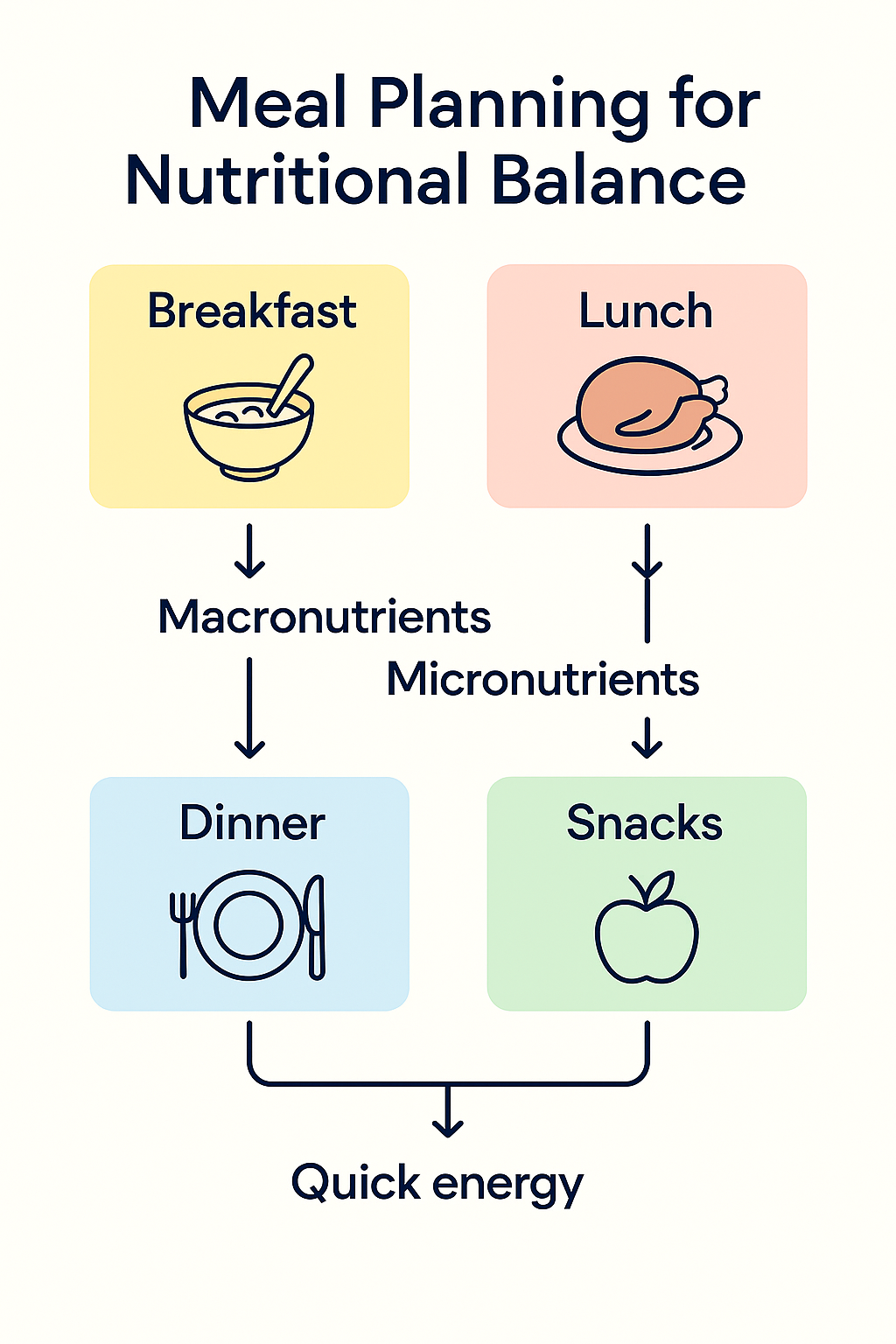
Ensure that each meal includes a balance of macronutrients – carbohydrates, proteins, and fats – as well as a variety of micronutrients.
Variety
Incorporate a wide range of foods to provide a spectrum of vitamins and minerals. Colourful fruits and vegetables, whole grains, lean proteins, and healthy fats should all feature in the plan.
Portion Control
Use tools such as measuring cups, scales, and visual cues to manage serving sizes. The Eatwell Guide provides a visual representation of how different food groups should contribute to the overall diet.
Consistency
Regular meal and snack times help to manage hunger and regulate blood sugar levels.
Hydration
Include fluids, primarily water, to maintain hydration. The National Health Service (NHS) recommends drinking six to eight glasses of fluids per day.
Creating a Meal Plan
To create a meal plan, follow these steps:
Assess Nutritional Needs: Calculate energy requirements and consider any specific dietary needs.
Choose a Meal Structure: Decide on the number of meals and snacks per day.
Select Foods: Choose foods that meet macronutrient and micronutrient requirements. Utilize the Eatwell Guide to ensure balance.
Plan Meals and Snacks: Design each meal and snack to provide a range of nutrients. Include starchy carbohydrates, protein sources, fruits and vegetables, and small amounts of healthy fats.
Review and Adjust: Analyze the meal plan to confirm it meets nutritional guidelines. Adjust as necessary for variety and balance.