
Certain populations and conditions require special consideration when meal planning:
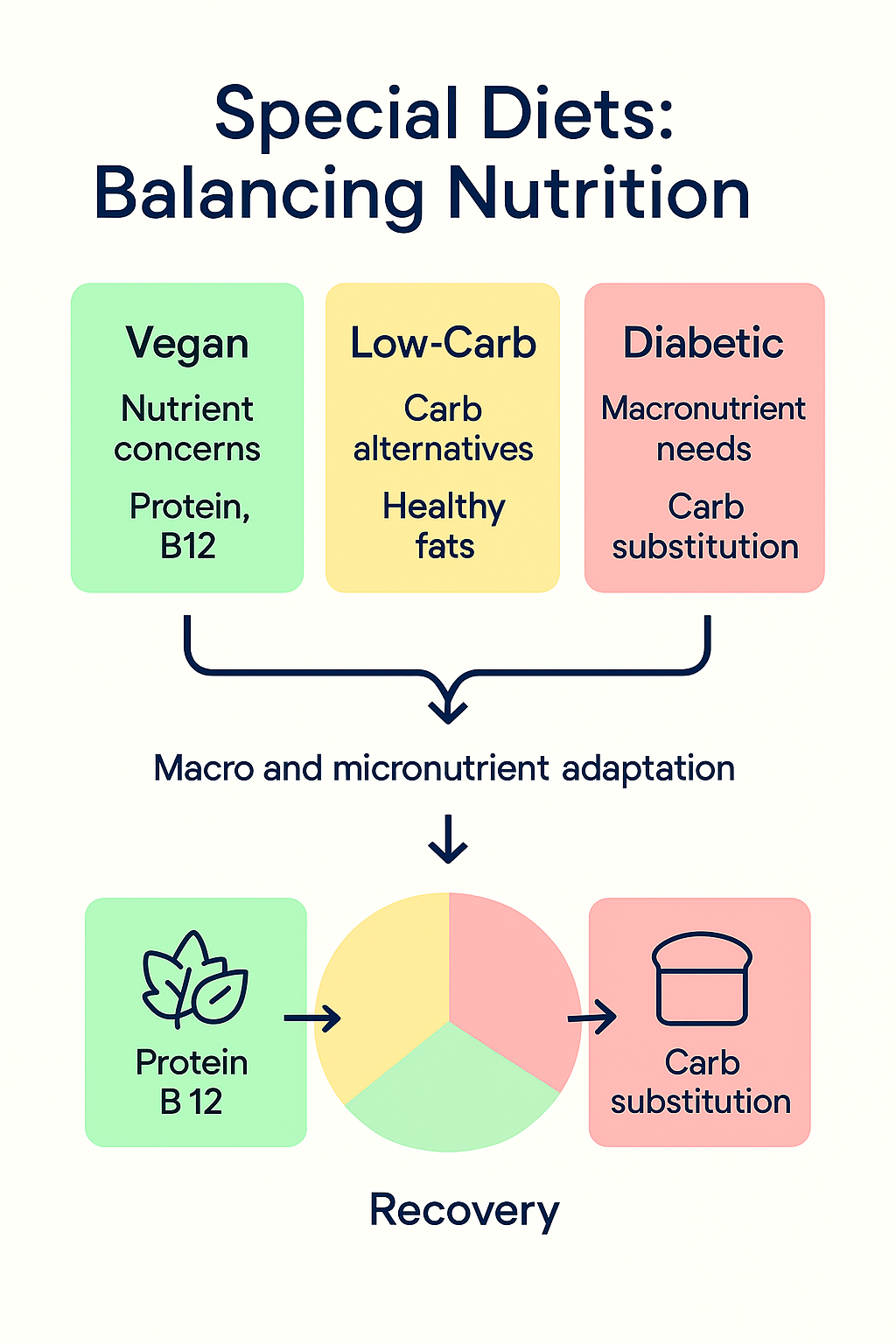
Vegetarian and Vegan Diets: Ensure adequate intake of nutrients commonly found in animal products, such as vitamin B12, iron, calcium, and omega-3 fatty acids.
Weight Management: For weight loss, create a calorie deficit while maintaining nutritional adequacy. For weight gain, increase calorie intake through nutrient-dense foods.
Food Allergies and Intolerances: Substitute allergenic foods with alternatives that provide similar nutrients.
Cultural and Religious Diets: Respect cultural and religious food practices by incorporating acceptable foods and avoiding restricted items.
Practical Meal Planning Exercise
Now, let’s apply what we’ve learned by creating a sample meal plan for a day. Consider a moderately active adult female with no specific health conditions:
Breakfast: Porridge made with oats, skimmed milk, topped with a sliced banana and a sprinkle of seeds.
Mid-Morning Snack: A small handful of unsalted nuts and an apple.
Lunch: Whole grain pasta salad with mixed vegetables, chickpeas, and a drizzle of olive oil.
Afternoon Snack: Low-fat Greek yogurt with a handful of berries.
Dinner: Grilled salmon with steamed broccoli, carrots, and a serving of quinoa.
Evening Snack: A slice of whole grain toast with a thin spread of peanut butter.